
A busy life can feel accomplished, but not always experienced
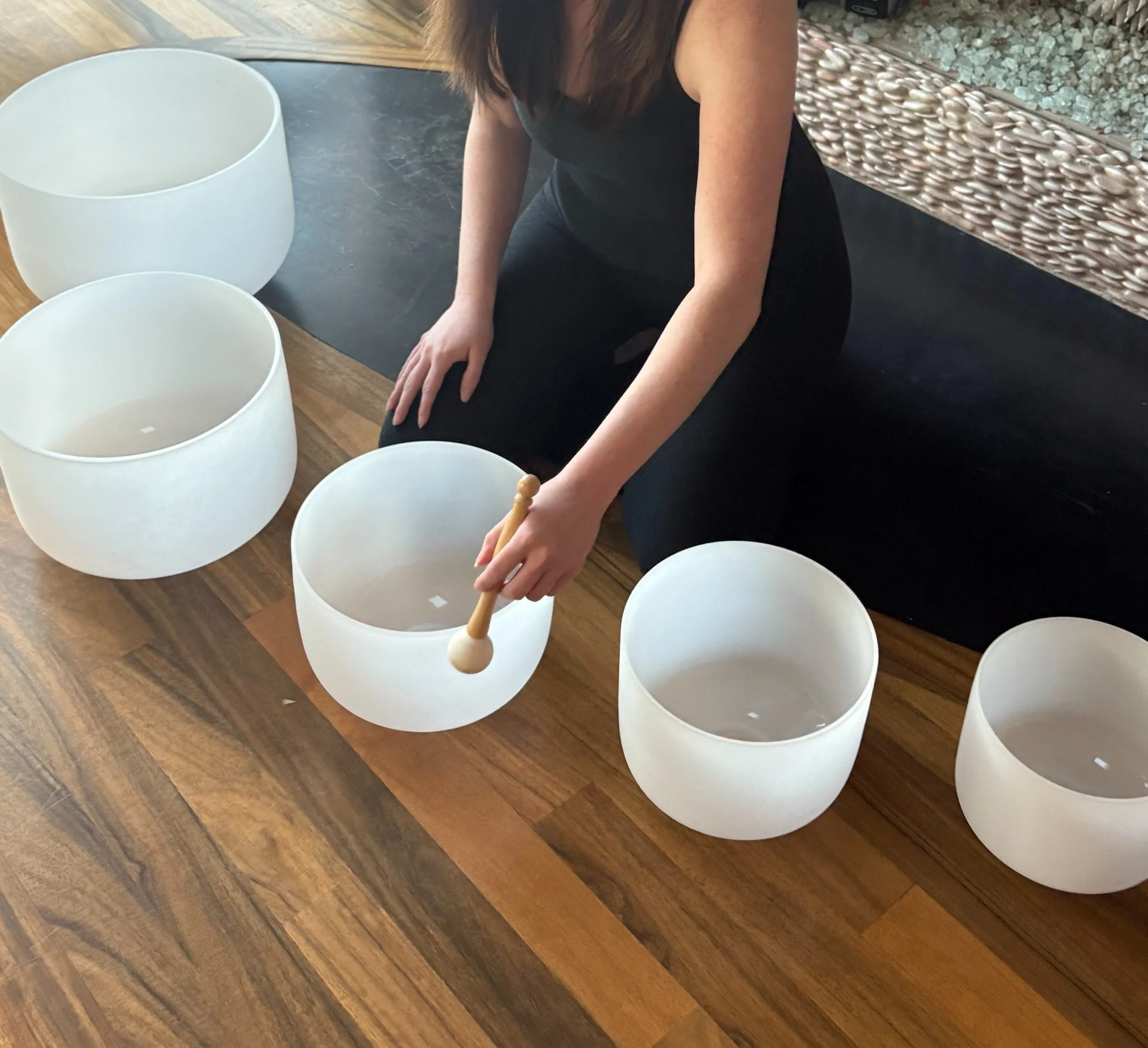
sound therapy brings us back to the present moment
Slowing Down Doesn’t Come Easily
When your mind is accustomed to planning, anticipating, and responding, slowing down doesn’t necessarily happen just because you finally have some time.
You might find yourself rechecking your phone throughout dinner, or replaying the workday while spending time with people you love, or reaching for something to occupy your attention the moment things become quiet.
Being fully present to enjoy your meal, your family, or your friends- or simply a few minutes to yourself can be surprisingly difficult.
If your days are busy, your mind is likely busier.
A busy life can feel accomplished, but not always experienced.
Managing responsibilities and filling free time with “the next thing” can create a sense of pride. We work hard so we can enjoy what we’ve worked for—celebratory dinners, trips planned for months, and calendars filled with experiences that reflect a life in motion.
Why Sound?
Being present is not always a switch we can simply decide to flip on. When the mind is accustomed to planning, anticipating, and responding, trying to force it to become quiet can feel like one more thing to accomplish.
Even meditation itself can start to feel like another job: finding the right practice, deciding how long to do it, sitting down, getting started, and trying to stay with it when your mind is “tired but wired.”
Once you do start, traditional meditation can still feel like being given a roadmap without knowing the destination. You may understand the instructions—follow your breath, notice your thoughts, return to the present…but still wonder what the deeper sense of relaxation and peace you’re practicing toward is actually supposed to feel like.
Rather than requiring you to direct the entire experience yourself, immersive sound gives your attention something immediate to engage with. Gentle guidance and breathwork help structure the experience, so the responsibility of figuring out how to “get there” isn’t entirely on you.
You don’t have to choose the practice, create the structure, or already know how to quiet your mind.
Simply allow the experience to carry you
Reducing The Burden
Beyond Short-Term Relaxation
Feeling deeply relaxed during a session is a valuable experience, but Somatic Sound is built around a larger idea:
It’s difficult to intentionally move toward a state or feeling you’ve never experienced before.
To be in a state of relaxation or stillness that is deeper than where you've gone before can give your mind and body a reference point for what it feels like when your attention isn’t being pulled as strongly by thoughts by responding, judging, or reacting.
Rather than trying to control or eliminate thoughts—a common misconception about meditation—the practice becomes noticing when your attention has been pulled away and learning what it feels like to return back to stillness again.
With practice, you can begin to recognize these shifts in attention more steadily— not only during a sound session, but in everyday moments when you notice yourself ruminating on work on your time off, or reaching for distractions that drain you when already overstimulated.
The intention is not to become dependent on sound immersion experiences in order to relax. Sound can help you experience the state; mindfulness is what allows you to begin to recognize it.
Over time, the goal is for that experience to become something you understand well enough to practice toward outside of a session, when presence, perspective, or a reset are needed most.
Sound isn’t the destination— it’s the doorway.
If slowing down still feels difficult when you finally have time to rest, this is a place to begin.
Meet Your Practitioner

My approach combines my health and science background with personal experience, emphasizing how proper guidance in a neuroscience-informed sound immersion experience can offer much more than just short term relief of stress.
I believe that making the right conditions for regulation can make empowering practices such as mindfulness and meditation feel more accessible, slowly building those mind-body connections over time without the discipline or pressure. While sound itself is not the destination, it can become a powerful doorway into deeper mental, emotional, and physiological states that many people struggle to access.
Background:
B.A. in Neuroscience
Healthcare
Research experience in traumatic brain injury outcomes, neuropharmacology, and opioid relapse prevention strategies
200-hour Sound Practitioner certification through SoundEmbrace Institute